
Best Construction Materials for Extreme Heat Conditions in Saudi Arabia
Introduction
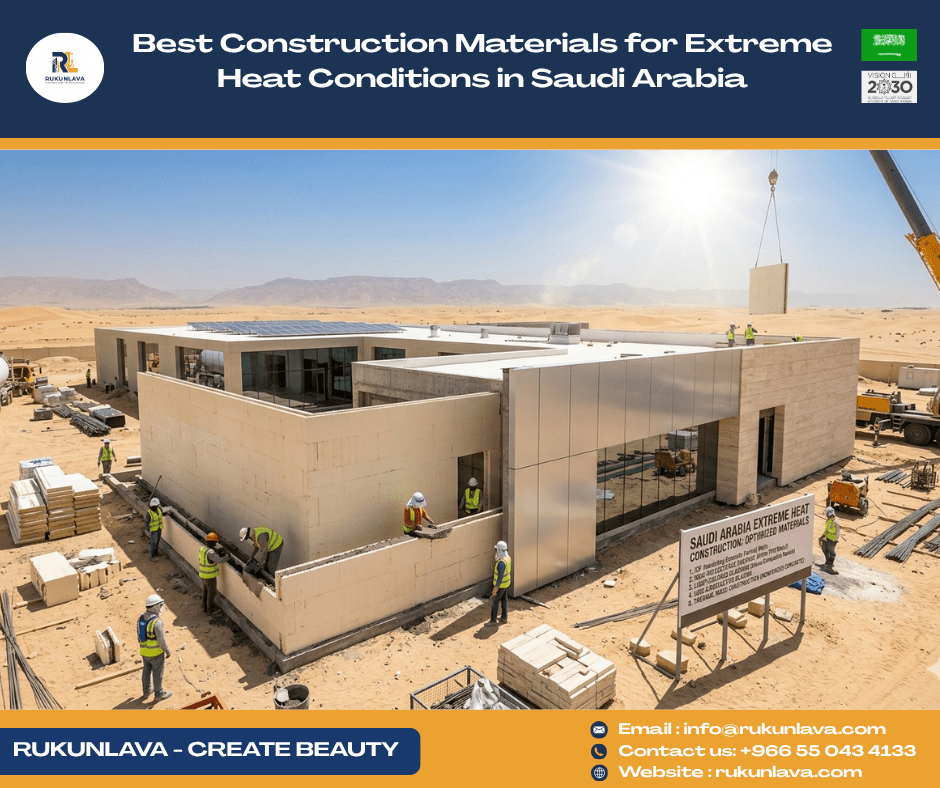
Saudi Arabia’s climate presents unique challenges for the construction industry. With temperatures often exceeding 45°C, selecting the right building materials is not just important—it’s critical. The right materials can improve durability, reduce maintenance costs, and significantly enhance energy efficiency.
In this blog, we’ll explore the best construction materials for extreme heat conditions and how they can ensure long-lasting and sustainable structures.
Why Material Selection Matters in Hot Climates
Extreme heat can cause:
- Structural expansion and cracking
- Faster material degradation
- Increased cooling costs
- Reduced building lifespan
Choosing heat-resistant materials helps maintain structural integrity while improving indoor comfort.
1. Concrete (High-Performance & Insulated)
Concrete remains one of the most widely used materials in Saudi Arabia.
Benefits:
- High thermal mass (absorbs and releases heat slowly)
- Strong and durable
- Fire-resistant
Pro Tip:
Use insulated concrete forms (ICFs) or add thermal insulation layers to improve performance in extreme temperatures.
2. Autoclaved Aerated Concrete (AAC Blocks)
AAC blocks are becoming increasingly popular in modern construction.
Benefits:
- Excellent thermal insulation
- Lightweight and easy to install
- Reduces energy consumption
These blocks help keep interiors cool, reducing reliance on air conditioning.
3. Reflective Roofing Materials
Roofing plays a major role in heat absorption.
Best Options:
- Cool roof coatings
- Reflective tiles
- Metal roofing with heat-reflective paint
Benefits:
- Reflects sunlight instead of absorbing it
- Reduces indoor temperatures
- Improves energy efficiency
4. Insulated Glass & Double Glazing
Windows are a major source of heat transfer.
Benefits:
- Reduces heat penetration
- Improves indoor comfort
- Enhances energy efficiency
Double-glazed windows with low-emissivity (Low-E) coatings are ideal for hot climates.
5. Gypsum Boards with Thermal Insulation
Used in interior construction, gypsum boards can improve temperature control.
Benefits:
- Lightweight and cost-effective
- Improves insulation when combined with thermal layers
- Ideal for ceilings and partitions
6. Stone & Natural Materials
Natural stone like granite or limestone performs well in hot climates.
Benefits:
- High durability
- Heat resistance
- Low maintenance
These materials are often used for exterior cladding.
7. Steel with Protective Coating
Steel is widely used in commercial and industrial construction.
Challenge:
Steel absorbs heat quickly.
Solution:
Use:
- Thermal insulation layers
- Reflective coatings
- Sandwich panels
8. Insulated Sandwich Panels
Perfect for industrial buildings and warehouses.
Benefits:
- Excellent thermal insulation
- Fast installation
- Cost-effective for large projects
Key Tips for Building in Extreme Heat
- Use light-colored exterior finishes to reflect sunlight
- Incorporate proper insulation in walls and roofs
- Design buildings with ventilation in mind
- Use energy-efficient HVAC systems
Conclusion
Building in extreme heat conditions like those in Saudi Arabia requires smart material selection. From insulated concrete to reflective roofing and AAC blocks, the right choices can significantly improve building performance, reduce energy costs, and extend lifespan.
At RukunLava Construction, we specialize in selecting and implementing the best materials suited for the region’s climate—ensuring durability, efficiency, and long-term value for every project.
website : rukunlava home
email : info@rukunlava.com
 English
  العربية