
How to Maintain Your Building After Construction
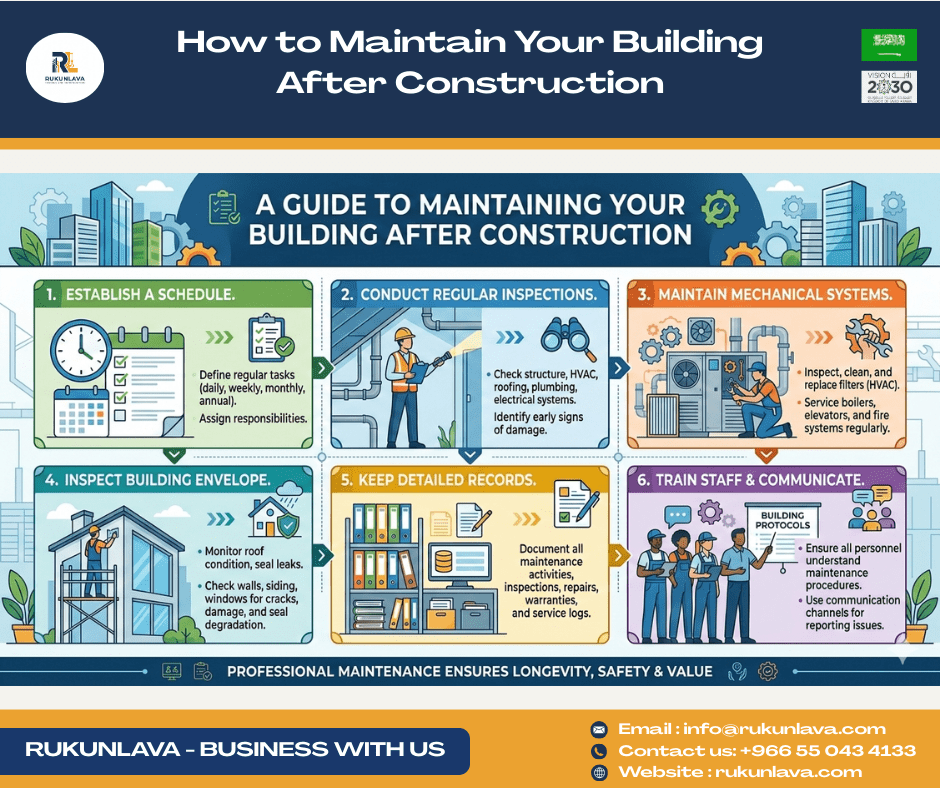
Constructing a building is a major investment, but the real work often begins after the project is completed. Proper maintenance ensures that your building remains safe, durable, and visually appealing for many years. Without regular care, even the strongest structures can develop issues that lead to costly repairs. Whether it’s a residential villa, commercial property, or office building, following the right maintenance practices will protect your investment and extend the life of your property.
1. Inspect the Building Regularly
Routine inspections are essential after construction. Over time, small cracks, leaks, or structural shifts can occur. Conducting regular inspections helps identify minor issues before they turn into major problems.
Key areas to inspect include:
- Walls and ceilings for cracks or moisture
- Flooring and interlock areas for damage
- Windows and doors for proper sealing
- Roof and drainage systems
Scheduling inspections every 6–12 months can significantly reduce long-term maintenance costs.
2. Maintain the Roofing System
The roof is one of the most important parts of any building. It protects the entire structure from weather conditions such as heat, rain, and dust. Regular roof maintenance prevents leaks and structural damage.
Important roof maintenance steps include:
- Clearing debris and dust buildup
- Checking waterproofing layers
- Inspecting drainage outlets
- Repairing any cracks or damaged areas
Ignoring roof issues can result in water leakage that damages ceilings, walls, and electrical systems.
3. Protect Walls and Ceilings
Walls and ceilings, especially those made with gypsum boards or plaster, require proper care. Moisture and poor ventilation can cause stains, cracks, or mold growth.
To maintain them properly:
- Ensure good ventilation inside rooms
- Fix water leaks immediately
- Repaint surfaces every few years
- Check gypsum ceiling joints and edges
Regular care keeps interiors looking clean and professional.
4. Maintain Flooring and Interlock Areas
Outdoor flooring such as interlock tiles and concrete pavements require periodic maintenance to maintain their strength and appearance.
Recommended maintenance practices include:
- Cleaning surfaces regularly
- Replacing broken tiles
- Re-sanding interlock joints if needed
- Checking for uneven areas
Proper care prevents accidents and preserves the aesthetic value of driveways and walkways.
5. Maintain Plumbing and Drainage Systems
Plumbing systems should be monitored regularly to avoid water damage and leaks. Even small leaks can weaken structural components over time.
Maintenance tips:
- Check pipes and fittings periodically
- Clean drainage systems
- Inspect water pressure levels
- Repair leaks immediately
A well-maintained plumbing system helps prevent costly structural damage.
6. Electrical System Maintenance
Electrical systems installed during construction must be maintained for safety and efficiency. Faulty wiring or overloaded circuits can create serious hazards.
Best practices include:
- Inspecting electrical panels annually
- Replacing damaged wiring
- Ensuring proper grounding
- Hiring professionals for electrical repairs
Regular electrical checks help maintain a safe environment for occupants.
7. Exterior Cleaning and Maintenance
The exterior of a building is constantly exposed to dust, sunlight, and environmental elements. Regular cleaning preserves the building’s appearance and prevents material deterioration.
Exterior maintenance may include:
- Pressure washing walls
- Cleaning windows and glass panels
- Inspecting exterior paint
- Checking outdoor lighting
A well-maintained exterior also improves property value and curb appeal.
8. Schedule Professional Maintenance Services
While routine checks can be done by property owners, professional maintenance services provide deeper inspections and technical repairs. Working with experienced contractors ensures that structural systems, materials, and installations remain in optimal condition.
Professional maintenance teams can identify hidden issues and recommend preventive solutions before problems escalate.
Conclusion
Building maintenance is an ongoing responsibility that protects the quality, safety, and value of your property. By conducting regular inspections, maintaining key systems, and addressing issues early, property owners can avoid costly repairs and extend the life of their buildings.
Consistent maintenance not only preserves the structure but also ensures a comfortable and secure environment for everyone who uses the space. Investing time and resources in proper building care is the best way to safeguard your construction investment for the long term.
visit : home page
email : info@rukunlava.com
call/whatsapp : +966 55 043 4133
