
How Thermal Insulation Saves Electricity in Saudi Arabia
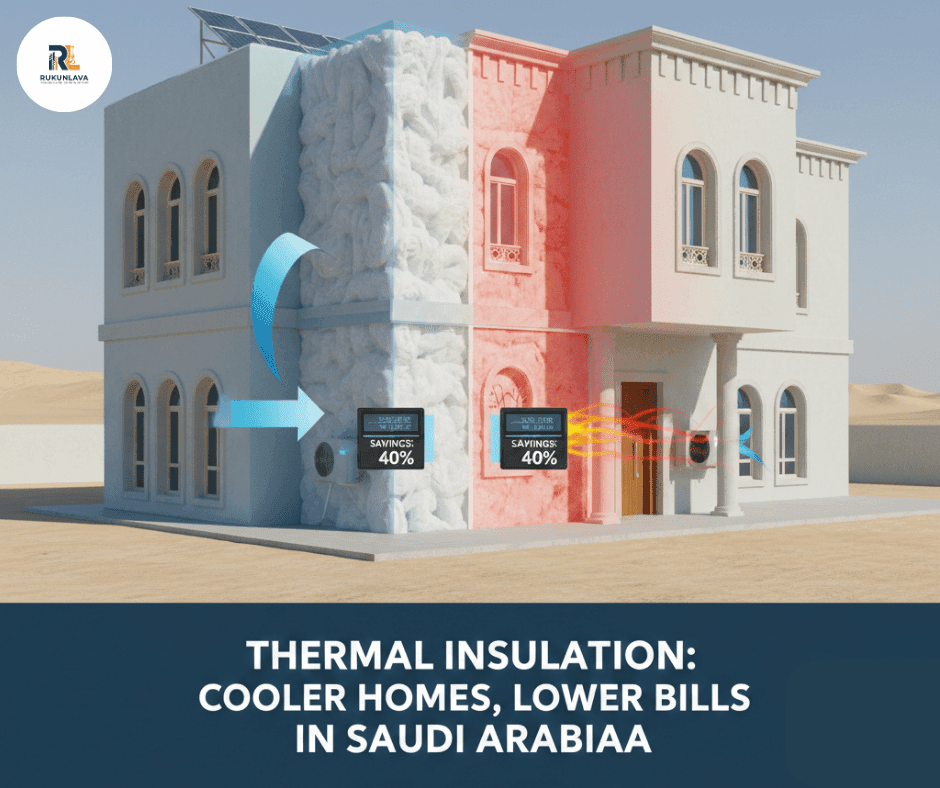
A Complete Guide for Homes, Offices & Commercial Buildings
Saudi Arabia experiences extreme heat for most of the year — especially in cities like Riyadh, Jeddah, Dammam, and Madinah. Air conditioning becomes a daily necessity, and this means higher energy bills. One of the most effective ways to reduce electricity consumption is thermal insulation.
In this blog, we explain how insulation works, why it matters in Saudi Arabia, and how it can dramatically lower electricity costs.
🌡️ Why Thermal Insulation Is Important in Saudi Arabia
In summer months, temperatures can reach 45°C – 50°C, and buildings absorb heat through walls, roofs, ceilings, and windows. Without insulation, AC units must run constantly to keep indoor temperature comfortable — which leads to:
✔ higher electricity bills
✔ increased AC maintenance
✔ faster system wear & tear
✔ uncomfortable living conditions
Thermal insulation prevents heat from entering the building, keeping indoor temperature cooler for longer.
🧊 How Thermal Insulation Saves Electricity
✅ 1. Reduces Heat Transfer
Insulation blocks heat from penetrating walls and ceilings. This decreases the indoor temperature naturally, so the AC runs less frequently.
✅ 2. Improves AC Efficiency
When rooms stay cool longer, the AC does not need to work at full power. Less running time = less electricity used.
✅ 3. Maintains Stable Indoor Temperature
Without insulation, indoor heat rises quickly. With insulation, the temperature stays stable, requiring less cooling and lower energy usage.
✅ 4. Prevents Energy Loss
Insulation stops cool air from escaping, keeping every room cool without wasting electricity.
📌 Average Energy Saving
Studies show that effective insulation can reduce electricity usage by 25% – 40% depending on building type and material quality.
🏠 Best Places to Install Insulation
| Area | Why it matters |
|---|---|
| Roof | 60–70% of heat enters from the top |
| External walls | Major heat transfer zone |
| Ceilings | Stores heat during the day |
| HVAC ducts | Prevents AC cooling loss |
The roof is the most important area in Saudi homes due to direct sun exposure.
🧱 Types of Thermal Insulation Used in Saudi Arabia
Some popular insulation materials include:
✔ Rockwool
✔ Glasswool
✔ Polyurethane foam (PUF)
✔ Polystyrene (EPS/XPS)
✔ Gypsum wall insulation systems
Each has different thermal resistance levels and cost options.
💡 Electricity Cost Savings Example
Here is a simple comparison for a 3-bed house in Riyadh:
| Condition | Average Monthly Bill |
|---|---|
| Without insulation | SAR 900 – 1,300 |
| With insulation | SAR 550 – 850 |
Estimated saving: SAR 300 – 500 per month depending on usage.
🌱 Environmental & Comfort Benefits
Insulation not only saves money — it improves lifestyle.
✔ Cooler rooms without over-cooling
✔ Better sound insulation
✔ Lower carbon footprint
✔ Reduced AC noise
✔ Lower humidity inside
📌 Helpful Tip
If your AC runs continuously but cooling is low, the problem may not be the AC — it may be the building insulation.
🏗️ Why Builders & Contractors Recommend Insulation
Saudi building design is moving toward energy efficiency and sustainability. Insulation is now a must for:
- villas
- apartments
- offices
- commercial buildings
- hospitals
- retail stores
It increases property value and reduces long-term expenses.
💬 Final Thoughts
Thermal insulation is one of the smartest investments for Saudi Arabia. It reduces electricity usage, increases comfort, and protects building structure from heat damage.
If you want to upgrade your ceiling or wall insulation using high-quality gypsum systems, professional installation matters.
📌 Rukunlava provides:
- thermal insulation works
- gypsum ceilings & walls
- duct & HVAC solutions
- professional construction services
📞 Contact us for inspection & quotation:
+966 55 043 4133
