
Fire-Resistant Building Materials Required in Saudi Arabia 🇸🇦
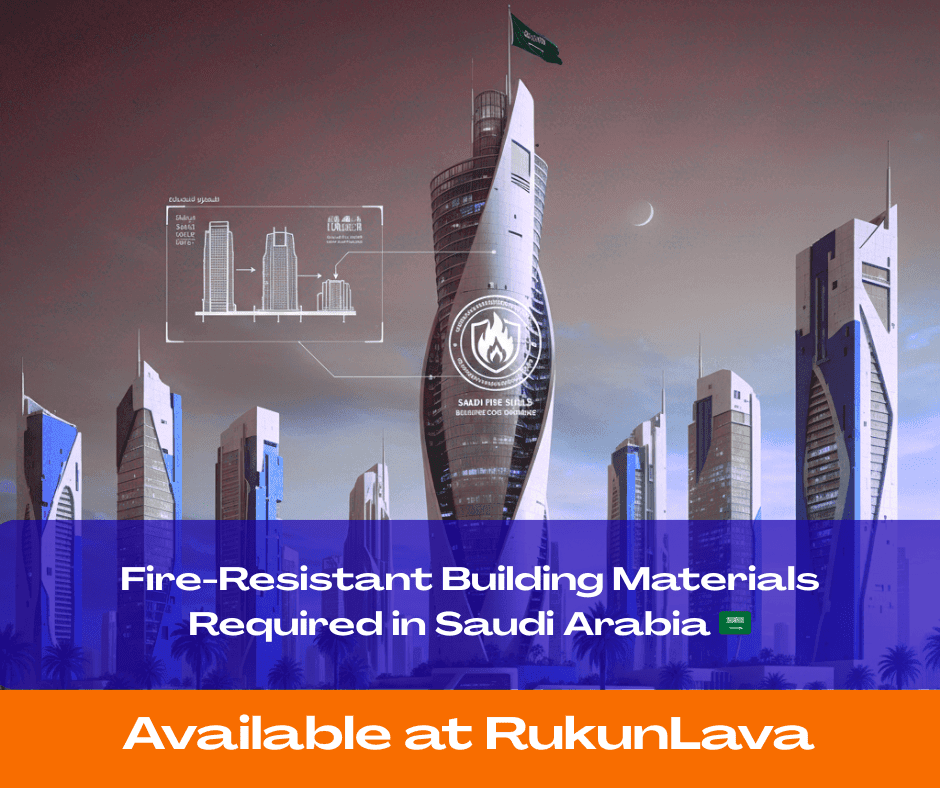
🔥 Introduction — Why Fire Resistance Matters
In Saudi Arabia, fire safety is regulated strictly under the Saudi Building Code (SBC) and Civil Defense regulations to protect human life, property, and investment. These regulations require buildings to use materials that limit fire spread, maintain structural integrity during fire events, and allow safe evacuation. Rukunlava.com
📌 Key Saudi Fire Safety Requirements
Saudi codes like SBC 801 (Fire Protection) mandate:
✔ Fire-resistant structural elements (walls, floors, ceilings)
✔ Non-combustible exterior cladding for multi-story buildings
✔ Fire barriers and compartmentation to slow fire spread
✔ Proper firestopping for penetrations and joints
✔ Rated fire doors and barriers in key areas
🧱 Fire-Resistant Construction Materials
1️⃣ Fire-Rated Structural Materials
These materials form the backbone of any fire-safe building:
- Concrete & Masonry Blocks – Naturally fire-resistant and stable under heat
- Steel with Fireproofing – Requires intumescent paints or cementitious coatings to prevent weakening at high temperatures
2️⃣ Fireproofing Systems for Steel
Steel doesn’t burn but loses strength quickly in a fire. Saudi standards require protection through:
- Intumescent Coatings
These expand under heat to create insulating char layers. - Cementitious Fireproofing
Applied as a sprayed or trowelable mix for hidden steel elements. - Fire-Resistant Board Enclosures
Gypsum or cement boards wrapped around steel members.
3️⃣ Fire-Resistant Doors
Fire doors help contain fire and smoke, and Saudi codes require them in key escape routes:
- Steel Fire-Rated Doors – Often rated 60–180 minutes resistance
- Fire-Rated Wooden Doors – Engineered for shorter duration (30–90 min)
These must be correctly installed, sealed, and maintained.
4️⃣ Fire-Resistant Boards & Panels
Used for ceilings, walls, and partitions:
- Fire-Rated Gypsum Boards – Provide passive fire protection and limit flame spread
- Fire-Resistant Fiber Cement Boards – Strong and non-combustible
- Calcium Silicate Boards – Excellent fire endurance for industrial use
🔥 These materials help create fire compartments that slow down the spread and protect critical zones.
5️⃣ Firestopping & Sealing Products
Gaps around cables, ducts, and pipes can let fire spread quickly.
- Firestop Sealants & Mortars
- Intumescent Wraps for Cables
- Firestop Collars for Pipes
These stop flames and smoke from moving through penetrations.
6️⃣ Exterior Cladding Materials
Exterior walls must use materials that don’t fuel fire or promote flame spread, especially for tall buildings.
Saudi codes require Class A (non-combustible) or Class B (low-flammability) cladding depending on building height.
🧪 Fire Resistance Ratings You Should Know
Fire-resistance is measured in hours — the time a material can resist fire without losing its function:
| Application | Typical Fire-Resistance |
|---|---|
| Residential Walls | 1–2 hours |
| Commercial & High-Rise Structures | 2–3 hours |
| Industrial Buildings | 2–4 hours |
Materials and systems should be tested per standards like ASTM E119, UL 263, and NFPA.
🏢 Practical Applications in Saudi Projects
🔹 Residential Buildings
- Fire-rated gypsum boards for internal partitions
- Fire doors for stairwells and corridors
- Firestop systems around utilities
🔹 Commercial & Office Buildings
- Intumescent coatings on exposed steel
- Non-combustible cladding on façades
- Fire dampers in HVAC penetrations
🔹 Industrial Facilities
- Cementitious fireproofing on columns and beams
- High-end fire barriers and rated enclosures
- Advanced firestop for cable systems
(Required by Saudi Industrial and Civil Defense safety mandates)
📌 Conclusion — Safety First
Using fire-resistant materials isn’t just a code requirement in Saudi Arabia — it’s essential for saving lives and protecting assets.
For architects, contractors, and material suppliers like RukunLava, understanding and specifying the right materials helps:
✅ Improve project safety
✅ Meet SBC + Civil Defense regulations
✅ Gain client trust and compliance
