
Top Tools Every Construction Company Should Use in 2026
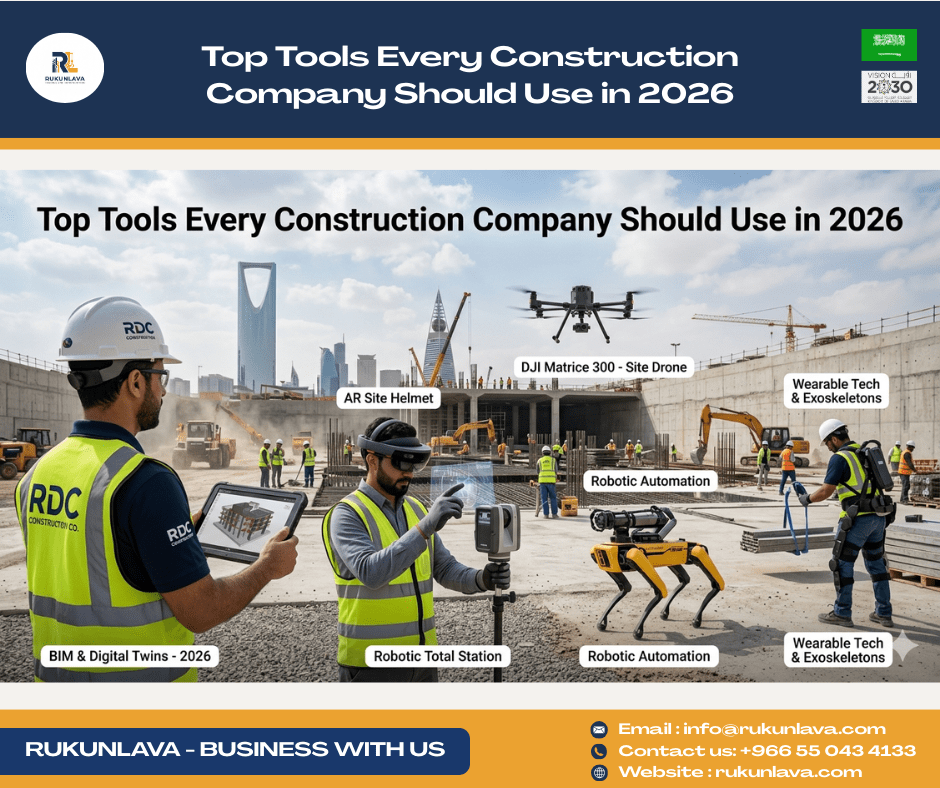
The construction industry is evolving rapidly. Modern technology and digital tools are helping companies improve project management, reduce costs, and increase efficiency. For construction companies that want to stay competitive in 2026, using the right tools is no longer optional — it is essential.
From project management to cost estimation and communication, the right tools can make construction projects smoother, faster, and more profitable.
Below are some of the most important tools every construction company should consider using.
1. Project Management Software
Construction projects involve many moving parts — contractors, engineers, materials, deadlines, and budgets. Project management software helps organize everything in one place.
These tools allow teams to:
- Track project progress
- Assign tasks to team members
- Manage deadlines
- Share documents and drawings
- Communicate with the entire team
Using project management software reduces confusion and helps projects stay on schedule.
2. Construction Estimation Tools
Accurate cost estimation is critical for construction companies. Small mistakes in budgeting can lead to major financial losses.
Estimation tools help companies calculate:
- Material costs
- Labor expenses
- Equipment costs
- Project timelines
These tools improve accuracy and help businesses provide professional quotations to clients.
3. Accounting and Financial Management Tools
Managing finances is one of the biggest challenges in construction. Companies must track invoices, payments, expenses, and project costs.
Accounting tools help businesses:
- Track income and expenses
- Generate invoices
- Monitor project profitability
- Manage payroll
Proper financial management ensures that projects remain profitable and cash flow stays healthy.
4. Communication and Collaboration Tools
Construction projects require constant communication between office teams, engineers, contractors, and workers on-site.
Communication tools make it easier to:
- Share updates quickly
- Send photos and site reports
- Coordinate teams in real time
- Avoid misunderstandings
Better communication means fewer delays and better project coordination.
5. Document Management Systems
Construction projects generate a large number of documents including drawings, permits, contracts, and reports.
Document management systems help companies:
- Store files securely
- Access documents from anywhere
- Share plans with team members
- Keep project records organized
This prevents important files from getting lost and improves overall workflow.
6. Website and Online Presence Tools
Today, construction companies also need a strong online presence. A professional website allows businesses to showcase projects, attract clients, and build credibility.
Key digital tools include:
- Professional websites
- Search Engine Optimization (SEO)
- Google Business Profile
- Social media marketing
These tools help construction companies reach more customers and generate new business opportunities.
Final Thoughts
The construction industry is becoming more technology-driven every year. Companies that adopt modern tools can manage projects more efficiently, reduce errors, and improve client satisfaction.
Whether it is project management, cost estimation, communication, or digital marketing, the right tools can significantly improve how construction companies operate.
Businesses that invest in these solutions will be better prepared to compete and grow in the modern construction market.
visit : home page
email : info@rukunlava.com
call/whatsapp : +966 55 043 4133.
