
Interlock Pavers Guide – Types, Sizes, and Installation Process
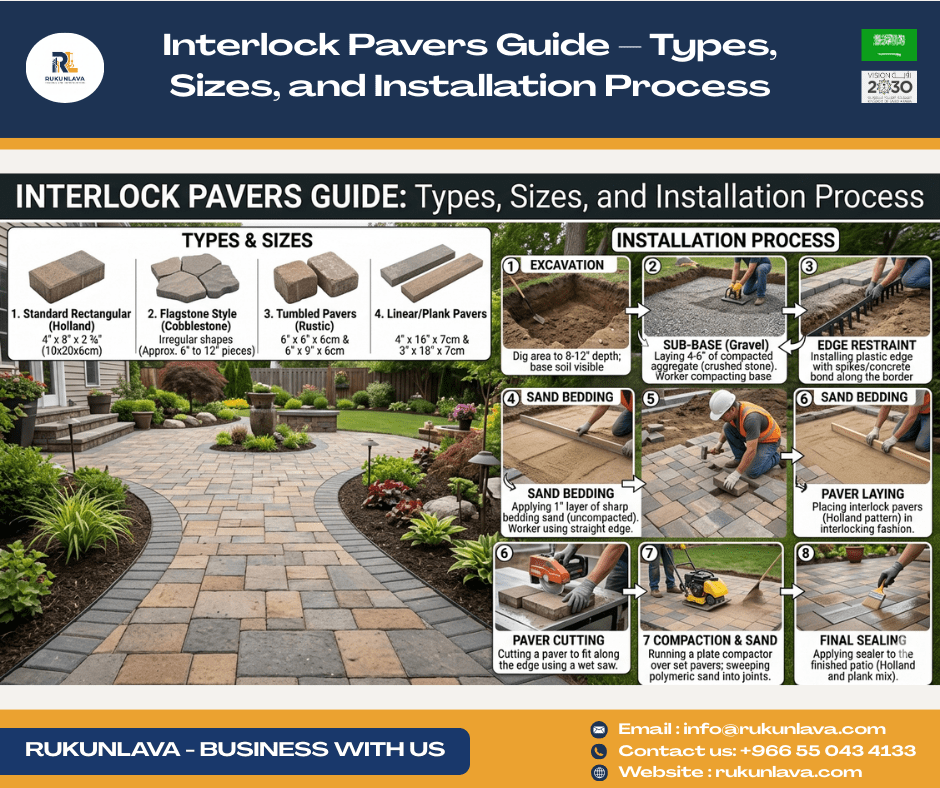
Interlock pavers have become one of the most popular solutions in the construction industry, especially for driveways, parking areas, walkways, and landscaping projects. They are known for their durability, strength, and attractive appearance, making them ideal for both residential and commercial developments.
If you are planning a construction project, understanding interlock pavers can help you choose the right materials. In this guide, we will explain the types, sizes, and installation process of interlock pavers.
What Are Interlock Pavers?
Interlock pavers are concrete or cement blocks designed to fit together like a puzzle, creating a strong and stable surface. Because the blocks interlock with each other, they distribute weight evenly across the surface.
This design makes them ideal for areas with heavy traffic, such as parking lots, roads, and driveways.
Types of Interlock Pavers
There are several types of interlock pavers available depending on the construction requirements.
1. Concrete Interlock Pavers
Concrete pavers are the most commonly used type in construction projects.
Features
- High durability
- Resistant to weather conditions
- Suitable for heavy traffic
- Ideal for commercial and residential projects
2. Clay Interlock Pavers
Clay pavers are made from natural clay materials and provide a traditional and natural appearance.
Features
- Natural color finish
- Long lifespan
- Heat resistant
- Suitable for landscaping and decorative pathways
3. Rubber Interlock Pavers
Rubber pavers are made from recycled rubber materials and are mostly used in playgrounds or walking areas.
Features
- Shock absorbing
- Slip resistant
- Eco-friendly option
Common Interlock Paver Sizes
Interlock pavers come in different sizes depending on the project requirements. Some of the most common sizes include:
| Size | Thickness | Common Use |
|---|---|---|
| 10 × 20 cm | 6 cm | Walkways and footpaths |
| 10 × 20 cm | 8 cm | Residential driveways |
| 20 × 20 cm | 6 cm | Landscaping areas |
| 20 × 20 cm | 8 cm | Parking areas |
For areas with heavy vehicle traffic, an 8 cm thickness is usually recommended.
Interlock Paver Shapes
Interlock pavers are available in various shapes to improve both design and structural strength.
Common shapes include:
- Rectangular
- Zigzag
- Hexagon
- I-Shape
- Uni-pavers
Zigzag and I-shape pavers are often used for roads and high-traffic areas because they provide stronger interlocking.
Interlock Pavers Installation Process
Proper installation is important to ensure a durable and long-lasting surface.
1. Site Preparation
The construction area is cleaned and leveled. The soil is compacted to create a strong foundation.
2. Base Layer Installation
A base layer of crushed stone or gravel is added to improve drainage and stability.
3. Sand Bedding Layer
A layer of sand is placed on top of the base where the pavers will be installed.
4. Paver Placement
Interlock pavers are placed carefully in the selected pattern.
5. Compaction
A plate compactor is used to press the pavers firmly into place.
6. Joint Filling
Fine sand is spread over the pavers and brushed into the joints to lock them together.
Advantages of Interlock Pavers
Interlock pavers are widely used in construction because they offer many advantages:
- High durability
- Easy maintenance
- Attractive appearance
- Fast installation
- Easy repair and replacement
If a section becomes damaged, individual pavers can be replaced without removing the entire surface.
Common Applications of Interlock Pavers
Interlock pavers are widely used in many construction projects, including:
- Residential driveways
- Parking areas
- Garden pathways
- Sidewalks
- Commercial landscapes
They are especially popular in regions such as Saudi Arabia, where durable and heat-resistant construction materials are essential.
Conclusion
Interlock pavers are a cost-effective, durable, and visually appealing solution for many construction projects. With proper installation and the right thickness, they can last for many years while maintaining their strength and appearance.
Whether you are building a driveway, walkway, or parking area, interlock pavers are an excellent choice for both residential and commercial developments.
visit : home page
email: info@rukulava.com
call/whatsapp : +966 55 043 4133
