
Sustainable Landscaping Solutions for Desert Regions
Introduction
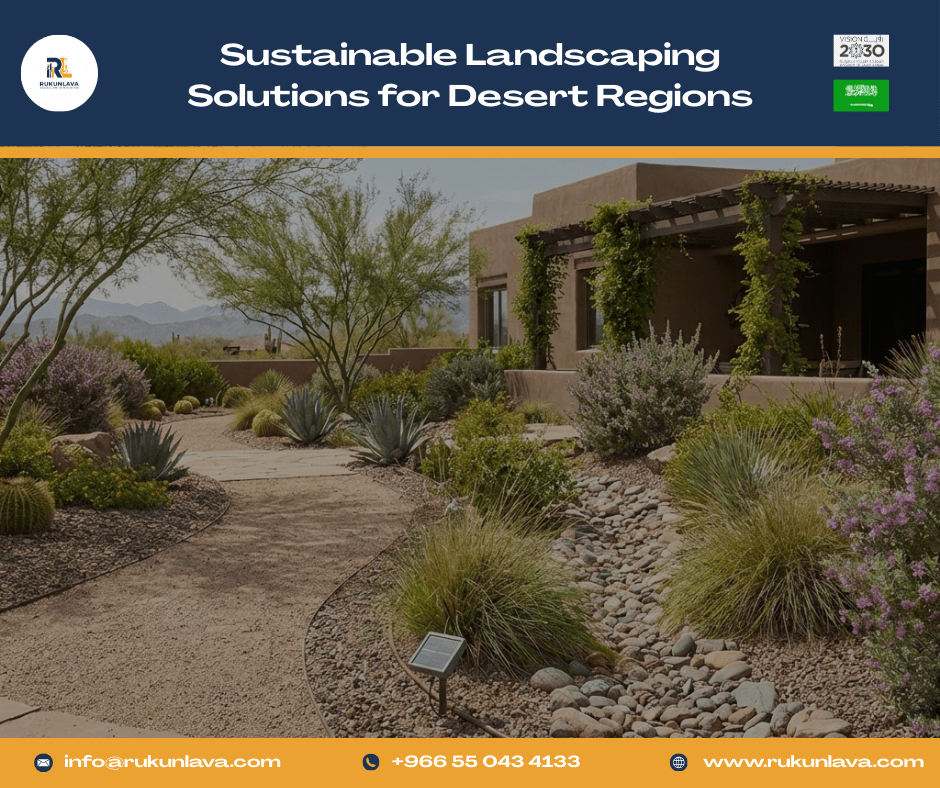
Landscaping in desert regions presents unique challenges due to extreme temperatures, limited water resources, and harsh soil conditions. However, with the right planning, materials, and techniques, sustainable landscaping can transform arid environments into functional, attractive, and eco-friendly spaces. In countries like Saudi Arabia, sustainable landscaping is no longer a luxury—it is a necessity aligned with environmental responsibility and long-term cost efficiency.
Understanding Desert Landscaping Challenges
Desert climates require landscaping solutions that can withstand:
- High temperatures and intense sunlight
- Minimal rainfall and water scarcity
- Sandy or rocky soil conditions
- Strong winds and dust storms
Traditional landscaping methods often fail in such environments, leading to excessive water consumption, high maintenance costs, and short project lifespans.
Key Sustainable Landscaping Solutions
1. Water-Efficient Irrigation Systems
Water conservation is the foundation of sustainable desert landscaping.
- Drip irrigation systems minimize water loss
- Smart irrigation controllers adjust water usage based on climate
- Zoned watering ensures plants receive only what they need
These systems significantly reduce water consumption while maintaining healthy landscapes.
2. Native and Drought-Resistant Plants
Using plants adapted to desert environments ensures durability and sustainability.
- Native species require less water and maintenance
- Drought-tolerant plants survive extreme heat
- Reduced need for fertilizers and chemicals
This approach creates landscapes that thrive naturally in desert conditions.
3. Natural Stone & Hardscaping Solutions
Hardscaping plays a critical role in desert landscaping.
- Natural stone pathways, walls, and features reduce water usage
- Stone withstands heat better than artificial materials
- Decorative stone elements enhance aesthetics and durability
Materials like onyx and regional natural stone add both beauty and long-term value.
4. Sustainable Soil Management
Healthy soil improves plant survival and water efficiency.
- Soil conditioning improves moisture retention
- Organic mulches reduce evaporation
- Ground covers protect soil from erosion
Proper soil preparation minimizes maintenance and enhances plant growth.
5. Energy-Efficient Lighting
Outdoor lighting can be both functional and sustainable.
- LED and solar-powered lighting reduce energy consumption
- Illuminated stone features enhance night-time aesthetics
- Smart lighting systems improve safety and visibility
This approach supports sustainability while elevating visual appeal.
Benefits of Sustainable Landscaping in Desert Regions
- Reduced water consumption
- Lower maintenance and operational costs
- Improved environmental impact
- Enhanced urban and commercial aesthetics
- Long-lasting and climate-resilient designs
Sustainable landscaping not only protects natural resources but also adds long-term value to infrastructure and commercial projects.
Rukunlava’s Approach to Sustainable Landscaping
At Rukunlava, sustainability is integrated into every landscaping project. By combining innovative design, premium natural materials, and environmentally responsible practices, we deliver landscaping solutions that are both visually striking and built for desert conditions.
Our expertise ensures:
- Climate-appropriate material selection
- Efficient water and energy management
- Durable designs with minimal environmental impact
Conclusion
Sustainable landscaping in desert regions is about working with nature, not against it. Through smart planning, water-efficient systems, and durable materials, it is possible to create landscapes that are beautiful, functional, and environmentally responsible. As urban development continues to grow in desert regions, sustainable landscaping will remain a key pillar of modern infrastructure.
visit website : rukunlava
Contact via Email : info@rukunlava.com
Contact Via Call/ WhatsApp : +966 55 043 4133
